What Is Crowd Management and Why It Matters for Events in Saudi Arabia
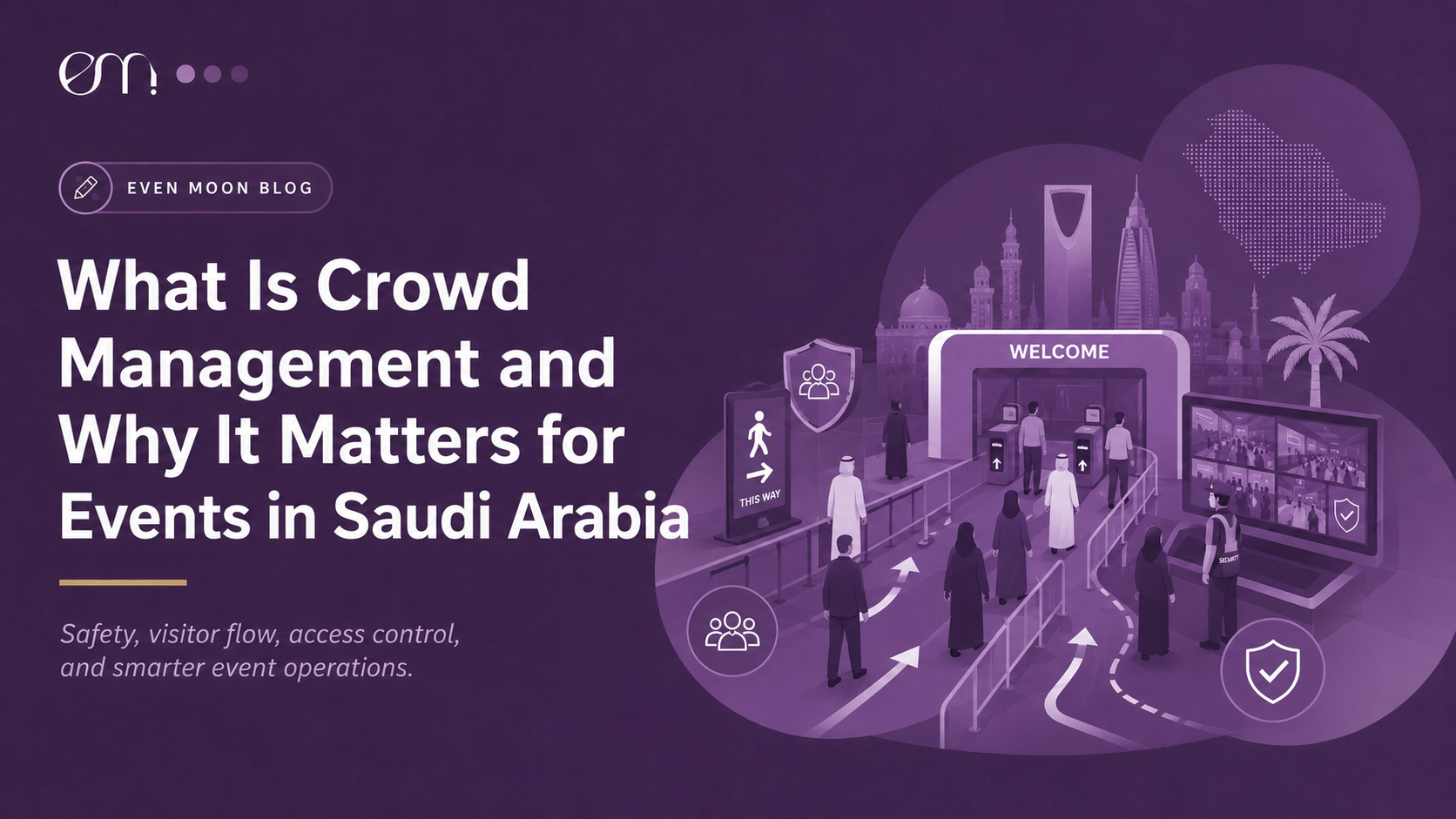
What Is Crowd Management and Why It Matters for Events in Saudi Arabia
Crowd management is the planning, organization, monitoring, and control of how people move through an event space. It protects visitor safety, improves the guest experience, reduces congestion, supports emergency response, and helps the event operate smoothly.
In Saudi Arabia, crowd management is especially important because events are growing in size, complexity, and public visibility. Conferences, exhibitions, festivals, graduation ceremonies, national celebrations, product launches, and corporate events all need clear crowd flow planning.
A beautiful event can fail if people cannot enter, move, sit, queue, or exit comfortably.
Crowd Management vs. Crowd Control
Crowd management and crowd control are not the same.
Crowd management is proactive. It happens before problems appear. It includes planning entrances, exits, queues, signage, staff positions, capacity, routes, and emergency procedures.
Crowd control is reactive. It happens when a crowd issue already exists and needs to be contained.
Professional event planning should focus on crowd management first. If the event depends only on crowd control, the planning was already weak.
Why Crowd Management Matters
Good crowd management protects three things: safety, experience, and reputation.
1. Safety
Visitor safety comes first. Poor crowd planning can lead to congestion, confusion, blocked exits, slow emergency response, and unnecessary pressure on field teams.
A safe event includes:
- Clear entry and exit points.
- Emergency routes.
- Capacity monitoring.
- Visible signage.
- Trained ushers.
- Controlled queues.
- Communication between teams.
2. Experience
Guests judge an event from the moment they arrive. Long queues, unclear directions, crowded entrances, and disorganized seating create frustration even before the program starts.
Smooth movement improves the entire experience.
3. Reputation
Crowd issues are highly visible. They affect the reputation of the organizer, sponsors, venue, and event management company. Strong crowd management protects the brand behind the event.
Main Elements of Crowd Management
Crowd management is not one task. It is a system of connected decisions.
1. Capacity Planning
Every event space has a realistic capacity. This is not only the number of people who can fit inside the venue. It also includes how many people can move safely through entrances, exits, corridors, registration counters, toilets, food areas, and parking zones.
Capacity planning should consider:
- Total expected attendees.
- Peak arrival time.
- Hall capacity.
- Queue areas.
- Seating layout.
- Emergency exits.
- Staff-only areas.
- VIP areas.
- Food and beverage zones.
The goal is not just to fit people. The goal is to allow people to move safely and comfortably.
2. Entry and Exit Design
Entrances and exits are critical pressure points.
A professional plan defines:
- Main entrance.
- VIP entrance.
- Supplier entrance.
- Staff entrance.
- Emergency exits.
- Exit flow after the event.
- Re-entry rules.
- Security screening points.
The exit plan is often ignored, but it is just as important as arrival. At the end of an event, many people leave at the same time. Without a plan, congestion happens quickly.
3. Registration and Access Control
Registration must support crowd flow, not slow it down.
Useful tools include:
- QR codes.
- Digital tickets.
- Badge printing.
- Pre-event confirmation.
- Guest segmentation.
- On-site kiosks.
- Separate VIP check-in.
- Backup manual lists.
Access control also helps prevent unauthorized entry and supports accurate attendance reporting.
4. Route Planning and Wayfinding
Visitors should not need to ask where to go every few minutes. Clear wayfinding reduces confusion and pressure on staff.
Good wayfinding includes:
- Directional signs.
- Zone labels.
- Floor maps.
- Digital screens.
- Color-coded routes.
- Staff positioned at decision points.
- Clear Arabic and English labels when needed.
Routes should be planned for different groups: VIPs, general visitors, speakers, media, staff, and suppliers.
5. Queue Management
Queues are not always a problem. Unmanaged queues are the problem.
Plan queues for:
- Registration.
- Security screening.
- Food and beverage.
- Exhibition booths.
- Photo opportunities.
- Restrooms.
- Transportation.
A good queue is visible, organized, fair, and moving.
6. Staff Deployment
Even the best plan fails without trained people on-site.
Crowd management teams should know:
- Where to stand.
- What to say.
- Who to contact.
- How to guide visitors.
- How to handle pressure.
- How to respond during emergencies.
Briefing the team before the event is essential. Do not place staff without context.
7. Monitoring and Control
Large events need real-time monitoring. The team should know where crowd pressure is building and respond early.
Monitoring can include:
- Field supervisors.
- CCTV.
- Radio communication.
- Zone capacity checks.
- Entry count tracking.
- Registration data.
- Incident logs.
The faster the team sees a problem, the easier it is to solve.
8. Emergency Planning
Emergency planning should be part of crowd management from the beginning.
Prepare for:
- Medical cases.
- Fire alarms.
- Weather changes for outdoor events.
- Power interruptions.
- Crowd congestion.
- Lost children or missing guests.
- VIP movement issues.
- Evacuation needs.
Every team member should know the escalation path.
Crowd Management for Different Event Types
Conferences
Focus on registration, session transitions, seating, VIP routes, speaker movement, and break-time crowd flow.
Exhibitions
Focus on visitor circulation, booth congestion, entry scanning, signage, emergency access, and peak visitor periods.
Graduation Events
Focus on family seating, graduate movement, stage flow, photography zones, and organized exit.
Festivals and Public Events
Focus on large-scale capacity, zone control, emergency routes, security coordination, signage, and continuous monitoring.
Product Launches
Focus on controlled entry, media positions, demo zones, VIP experience, and smooth movement around the product display.
Common Crowd Management Mistakes
Avoid these mistakes:
- Using one entrance for all guest types.
- Ignoring exit flow.
- Placing registration too close to the entrance.
- Not separating VIP and general routes.
- Using unclear signs.
- Not briefing ushers.
- Underestimating peak arrival time.
- Blocking emergency routes with branding or furniture.
- Forgetting backup plans.
Final Thought
Crowd management is not a secondary service. It is one of the foundations of successful event management. When done well, guests may not notice it because everything feels smooth. When done poorly, everyone notices.
For events in Saudi Arabia, professional crowd management is essential for safety, visitor satisfaction, and reputation. It turns movement into a controlled experience and helps every part of the event perform better.
You might also like
Corporate Event Checklist: From Strategy to Post-Event Reporting
A complete corporate event checklist for Saudi companies planning internal events, annual gatherings, product launches, stakeholder meetings, and brand activations.
Read more
Conference Planning Checklist for Saudi Organizations
A detailed conference planning checklist for companies, government entities, universities, and institutions organizing professional conferences in Saudi Arabia.
Read more
How to Choose the Right Event Management Company in Saudi Arabia
A practical guide for Saudi organizations choosing an event management partner for conferences, exhibitions, corporate events, festivals, and public activations.
Read more