Corporate Event Checklist: From Strategy to Post-Event Reporting
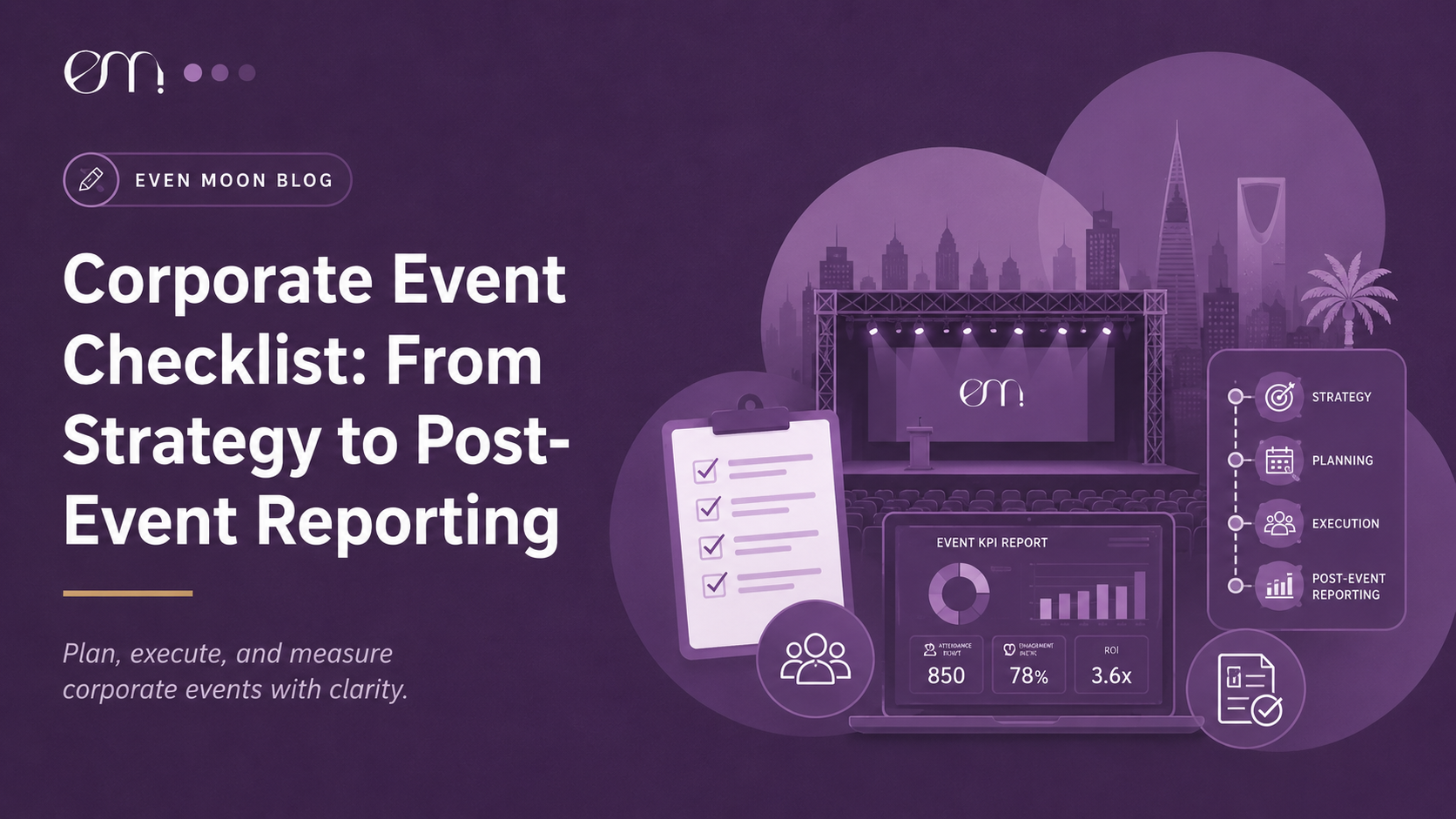
Corporate Event Checklist: From Strategy to Post-Event Reporting
Corporate events are not just gatherings. They are business tools. A well-planned corporate event can strengthen relationships, motivate teams, launch products, attract partners, communicate strategy, and build brand reputation.
In Saudi Arabia, corporate events are becoming more sophisticated. Companies now expect professional experiences that combine strong branding, smooth logistics, quality hospitality, media-ready moments, and measurable outcomes.
This checklist helps you plan a corporate event with structure and confidence.
1. Define the Business Purpose
Before selecting the venue or designing the stage, define why the event exists.
Common corporate event goals include:
- Annual company gathering.
- Leadership meeting.
- Employee recognition.
- Product launch.
- Client appreciation event.
- Partner networking event.
- Internal strategy announcement.
- Brand activation.
- Recruitment or career event.
- Investor or stakeholder presentation.
The purpose should guide every decision. A product launch needs energy, media attention, and demonstration space. An executive dinner needs privacy, protocol, and refined hospitality. An employee event needs engagement, flow, and emotional connection.
2. Define the Audience and Guest Experience
Corporate audiences are not all the same. A guest list may include board members, executives, employees, clients, partners, media representatives, influencers, government guests, or investors.
Segment the audience clearly:
- VIP guests.
- Internal teams.
- External clients.
- Media.
- Speakers.
- Sponsors.
- General attendees.
Each group may need a different invitation, entrance path, seating arrangement, hospitality level, and follow-up message.
3. Set Clear KPIs
Corporate events should be measurable. Even if the event is emotional or celebratory, it still needs success indicators.
Possible KPIs:
- Attendance rate.
- Guest satisfaction score.
- Number of qualified leads.
- Media mentions.
- Social media reach.
- Employee engagement.
- Stakeholder participation.
- Sales meetings generated.
- Content assets produced.
- Post-event survey results.
When KPIs are clear, planning becomes sharper and reporting becomes more useful.
4. Build the Event Concept
The concept is the creative idea that connects the business purpose with the guest experience.
A strong corporate event concept should include:
- Main theme.
- Event name.
- Visual identity.
- Key message.
- Tone of voice.
- Stage direction.
- Guest journey.
- Content moments.
- Photo and video opportunities.
The concept should not feel disconnected from the company. It should reflect the brand, industry, and audience expectations.
5. Choose the Right Venue
Venue choice affects budget, guest comfort, logistics, production, and brand perception.
Evaluate:
- Location.
- Capacity.
- Parking.
- Accessibility.
- VIP entrance.
- Ballroom or hall layout.
- Stage visibility.
- Ceiling height.
- Technical infrastructure.
- Catering quality.
- Supplier access.
- Loading area.
- Branding permissions.
- Prayer facilities.
For corporate events in Riyadh, Jeddah, and Dammam, allow enough time for guest arrival and traffic conditions.
6. Prepare the Budget With Real Detail
A corporate event budget should not be a single number. It should be divided into clear categories.
Typical categories:
- Venue.
- Production.
- Stage and screens.
- Lighting and audio.
- Branding and printing.
- Hospitality.
- Furniture.
- Entertainment.
- Registration.
- Photography and videography.
- Event staff.
- Security and crowd management.
- Transportation.
- Permits if needed.
- Contingency.
A realistic budget reduces surprises. Always keep a contingency amount for urgent changes.
7. Manage Suppliers Professionally
Suppliers can either support the event or create problems. Work only with vendors who understand deadlines, quality standards, and corporate expectations.
Key suppliers may include:
- Production company.
- Stage builder.
- Audio and lighting team.
- Printing and branding provider.
- Furniture rental.
- Catering.
- Photography and videography team.
- Registration technology provider.
- Hostesses and ushers.
- Security team.
- Transportation provider.
Confirm responsibilities in writing. Avoid verbal agreements for critical items.
8. Design the Program Flow
The program should be engaging but not overloaded.
A typical corporate event flow may include:
- Guest arrival and registration.
- Welcome reception.
- Opening video.
- Host introduction.
- Leadership speech.
- Main announcement or presentation.
- Panel or keynote.
- Award segment or recognition.
- Networking.
- Closing moment.
- Departure.
Keep transitions clean. Most delays happen between segments, not during them.
9. Plan Media Coverage and Content
Corporate events are valuable content opportunities. Plan the media output before the event starts.
Prepare:
- Event photography brief.
- Video recap brief.
- Social media shot list.
- Interview questions.
- Press release.
- Branded backdrops.
- Photo opportunities.
- Same-day content delivery plan.
If media coverage is important, assign a content lead who understands both the event message and the publishing timeline.
10. Control On-Site Execution
On-site execution requires a clear command structure. Everyone should know who makes decisions and how issues are escalated.
Prepare:
- Event manager.
- Production manager.
- Guest relations lead.
- VIP protocol lead.
- Supplier coordinator.
- Registration lead.
- Media lead.
- Safety lead.
- Floor team.
Use radios or a clear communication channel for the team. During the event, slow communication creates visible mistakes.
11. Create the Run-of-Show
The run-of-show should include timing, cues, owners, and notes.
Include:
- Setup schedule.
- Rehearsal timing.
- Guest arrival.
- Speaker arrival.
- Technical cues.
- Music cues.
- Video cues.
- Lighting cues.
- Speech timing.
- Catering timing.
- Media moments.
- Closing sequence.
The run-of-show is the operational backbone of the event.
12. Report the Results
After the event, prepare a report that connects execution to business value.
A good report includes:
- Attendance numbers.
- Guest categories.
- Satisfaction results.
- Photos and video links.
- Media coverage.
- Social media performance.
- Lead or meeting outcomes.
- Budget summary.
- Operational notes.
- Recommendations.
This report helps leadership understand the event’s impact and improves future planning.
Final Thought
A corporate event should not be treated as a one-day activity. It is a business project with strategy, design, operations, suppliers, content, safety, and reporting. When managed properly, it becomes a powerful tool for communication, reputation, and growth.
You might also like
What Is Crowd Management and Why It Matters for Events in Saudi Arabia
Understand crowd management, visitor flow, safety protocols, wayfinding, access control, and why they are critical for successful events in Saudi Arabia.
Read more
Conference Planning Checklist for Saudi Organizations
A detailed conference planning checklist for companies, government entities, universities, and institutions organizing professional conferences in Saudi Arabia.
Read more
How to Choose the Right Event Management Company in Saudi Arabia
A practical guide for Saudi organizations choosing an event management partner for conferences, exhibitions, corporate events, festivals, and public activations.
Read more